
 |
Expected and Forced State
In the winter of that year, tens of thousands of people died of starvation and disease, and dozens of factories were opened months later, with a number of vital infrastructures, cultural institutions, universities and the State Museum. Even the national currency was established. Inside the country, non-Armenian population constantly incited new provocations against the state. The Armenian army was able to stop these provocations.
This year is the 100th anniversary of the first Republic of Armenia. How was the first republic proclaimed? Researcher journalist Tatul Hakobyan and historian Hamo Sukiasyan talk about it.
|
 |
The Second Epistle to the Thessalonians (2:1-3)
What is the purpose of evil, how does it act?
Father Arnak Harutyunyan interprets the verses 2:1-3 from the second epistle of Apostle Paul to the Thessalonians.
|
 |
Expected and Forced State
According to the National Statistical Service, every third child in Armenia is poor. Non-governmental organizations surveying the sector report that child poverty is growing faster than overall poverty, and poverty in the early years hinders the development of the child's potential. Social and educational centers have been set up in our country for the social support of children and the development of their potential. Knarik Garanfilian, the founder of the Family and Community charitable NGO and Bishop Bagrat Galstanyan, the Primate of Tavush Diocese talk about these processes.
|
 |
Source of Independence: Karabakh Movement
Karabakh Movement turns 30 this year. A movement, which is the source of our independence. Journalist Tigran Paskevichyan and bibliographer Meruzhan Karapetyan talk about the spirit, meanings and noteworthy aspects of Karabakh Movement.
The conversation is hosted by Anna Sargsyan.
|
 |
The Only War of Independent Neighbors
From the very start of the proclamation of the first Republic of Armenia, Armenia had serious problems with its neighbors, Georgia and Azerbaijan. Months after the proclamation of the Republic of Armenia, in December of 1918, a number of political and economic disagreements and border recoils ultimately led to a military conflict between Armenia and Georgia. Armenians in Tiflis and elsewhere were massively arrested and subjected to violence. Diplomatic mission officers were exiled from Tiflis. The two-week war unmasked the deep contradictions of the Armenian-Georgian relations. Historians Hamo Sukiasyan and Hovik Grigoryan talk about the causes of the Georgian-Armenian conflict of the beginning of the 20th century.
|
 |
First Steps of Independent Armenia in the World
How did the independence of Armenia start building up, how was it presented in the world? Diplomats, RA Extraordinary and Plenipotentiary Ambassadors of the first period of independent country Vahan Ter Ghevondyan and Davit Hovhannisyan recollect and discuss the topic.
The conversation is hosted by Anna Sargsyan.
|
 |
Tolerance and Intolerencein Armenian Literature
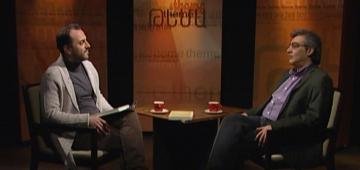
Tolerance is the expression of respect or tolerance for another nationality or religious affiliation, worldview, lifestyle, behavior and tradition. There are different views on how tolerant we are as Armenians. The topic of tolerance has many diverse and interesting manifestations in Armenian literature.
Hayk Hambardzumyan discussed these issues with Gevorg Ter-Gabrielyan, Executive Director of the Eurasia Partnership Foundation and publicist.
|
 |
Studies of foreign Armenologists in Armenian
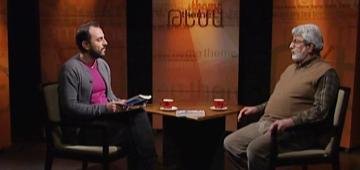
The US and European Centers for Armenology organize symposia on various issues of Armenology, monographs and articles are published in foreign languages, but most of them are not available in Armenian and to the Armenia-based scientific communities. Translations and editions of these foreign-language studies as such are rare in Armenia. What is the reason for this, how is it possible to develop the ties between foreign and Armenia-based Armenology, and also increase the level of mutual recognition?
Hayk Hambardzumyan discussed these issues with Kevork Bardakjian, Armenologist and Professorof the University of Michigan.
|
 |
Optimizing Primary Schools
Arayik Harutyunyan, the Chairman of the Investigative Committee established to investigate cases of illegal fund raising in primary schools, revealing physical and psychological violence against children and elimination of vicious practices in pre-school institutions, presents the results of the studies and points out the steps to be taken for the upcoming years. Psychologist Armine Vanyan analyzes the impact of these practices on psychology of pre-school children.
|
 |
Karabakh Movement and Independence of Armenia
Karabakh Movement turns 30 this year. How did the independence of Armenia come to existence during the movement, and its independence mortalized? Deputies of the Armenian Supreme Council (1990-1995), member of Karabakh Committee Alexan Hakobyan and Deputy Chairman of ANC (Armenian National Congress) party Aram Manukyan recollect and discuss the topic.
The conversation is hosted by Anna Sargsyan.
|
 |
Armenian-British Literary-Musical Bridge
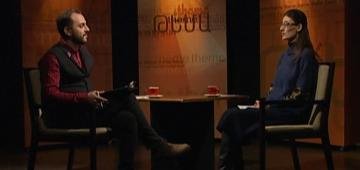
Recently a joint Armenian-British concert took place in Yerevan, where compositions of British contemporary composers based on Armenian classic poems were heard. How was this literary-musical bridge created, what do such partnerships give to our young composers, what opportunities our young musicians have in Armenia to realize their potential?
Hayk Hambardzumyan discussed these issues with Arpine Kalinina, composer, piano.
|
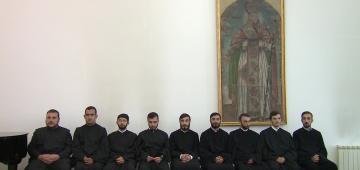 |
Deacons who graduated from Gevorkian Theological Seminary received Diplomas
On September 30, the Day of St. Gevork the Captain, graduates of the years 2016-2017 were handed diplomas at the Gevorkian Theological Seminary. The day was not accidental. Gevork IV, Catholicos of All Armenians, named the theological seminary after this saint who was martyred for Christianity.
|