 |
Meaning fullness of labor in national-public cultureEven societies with appropriate labor legislation experience lack of the concepts of creative happiness of individuals conditioned by labor and honest earning.
|
 |
Armenian Genocide: recognition and andretributionMass extermination of the Armenian nation living in the historical Armenia located in the territory of Ottoman Turkey, wa the first genocide of the 20th century. Regardless of the fact, that there is no lack of documentaries and evidence of the great genocide in 1915, no matter how evident is the impact of Armenian Genocide on the political and moral image of the world, nonetheless, Armenian nation still keeps fighting for the recognition and retribution of the Genocide. The topic is discussed by Ashot Melkonyan, the Director of NAS Institute of History, and Arsen Avagyan, PhD in History. The conversation is hosted by Anna Sargsyan.
|
 |
Confession and ReconciliationConfession and reconciliation are the key elements of the Christian faith. They are significantly absorbed into the Christian culture. Over time, the phenomena of confession and reconciliation started assuming a regulatory role in interpersonal relations too, thus turning into a norm in the social relationships. Why does the individual spiritual life assume the act of confession and how does it work as a regulation mechanism for the public life? The topic is discussed by Arshavir Gaboujian, program director of the Bible Society Armenia, and Pargev Ohanyan, lawyer and former judge. The conversation is hosted by Anna Sargsyan. |
 |
Civilizations and empires: part 5Involvement in the civilization system or just being civilized is perceived as something positive and prone to development. It lasts up till the moment when the political subject of civilization – the empire, steps forward, the key guarantee of it being supercentralization of power and standardization of life. Within the framework of the topic “Civilizations, empires”, political analyst AghasiYenokyan and orientalist Mikayel Hovhannisyan held a conversation.
|
 |
Civilizations and empires: part 4Is there a collision of civilization in the world today, or all that is happening is just a political struggle to expand the vital activities and impact zones? How does a civilization prove its viability? Is Armenia facing a choice of civilization nowadays? Mikayel Zolyan, political analyst, historian, and Dr. HaykakArshamyan, analyst in Regional Studies Center, analyse the above mentioned issues. The conversation is hosted by Anna Sargsyan. |
 |
Civilizations and empires: part 3Political analyst Manvel Sargsyan and journalist Armen Hovhannisyan analyse the types of modern civilization systems, change of world order within the context of Crimea developments. What are the choices for Armenia nowadays in its overall relations with countries having empire ambitions?
|
 |
Civilizations and empires: part 2Historian Zhirayr Liparityan and ethnographist Levon Abrahamyan analyse the need for creating Armenian assets across the modern civilization cross-roads. What challenges does Armenia face as a country standing on the border of civilizations with its wide-swept colonies around the world?
|
 |
Civilizations and empires: part 1Cultural anthropologist Aghasi Tadevosyan and culturologist Davit Hovhannisyan analyse the features of civilization systems and empires. How do the nations get involved in any civilization system and what is the civilization characteristics of the Russian empire? System participant-member, or a colony – how to tell the difference?
|
 |
Science on Demand: part 4Young scientists Anahit Manasyan, economist, and Daniel Ioannisyan, physicist, dispute over the issues related to the state funding of science and analyse the motivations driving young people to take up science. The conversation is hosted by Anna Sargsyan. |
 |
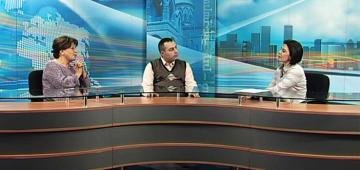
Our Perception of VictoryHistorian Haykak Arshamyan and conflictologist Artak Ayunts analyse the phenomenon of victory. How do we treat our military and moral victories, starting from Artsakh war to the martyrdom of Vardan and his troops? What do we consider to be a victory and how in general to we treat conflicts? The conversation is hosted by Anna Sargsyan.
|
 |
Science on Demand: part 3Within the scope of the topic “Science in Demand”, education expert Nune Dilanyan and sociologist Avetik Mejlumyan, discussthe issues related to the interconnection between science and education, problems of introducing modern academic knowledge in the area of education. The conversation is hosted by Anna Sargsyan. |
 |
Science on Demand, Part 2Zhanna Andreasyan, sociologist, and Movses Demirchyan, Candidate of Philosophical Sciences, debate over the public attitude towards sociece, mechanisms of formulating state and public demand. The conversation is hosted by Anna Sargsyan. |