 |
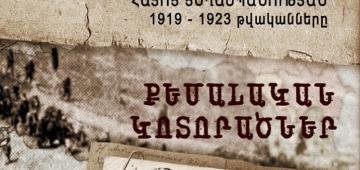
Armenian Genocide: Kemalist Massacres of 1919-1923The official Turkish history denies the Armenian Genocide, claiming that the Turkish Republic has nothing to do with the Genocide. The film “Kemalist Massacres” based on documentaries fully rebuts these claims. The Government of Mustafa Kemal Ataturk pursued the plans of young Turks by exterminating and displacing the Western Armenians from their historical motherland. The Kemalists filled the empties state budget on the account of the wealth that Armenians earned over centuries, paid most part of their foreign debts and on October 29, 1923 acclaimed the Republic of Turkey. Modern Turkey was built on the grounds of material, political and military values they appropriated during the Armenian Genocide.
|
 |
Philosophy of Modern ManWhat is the philosophy of a modern man? What truths does a man live with at present, what is most valuable to him/her? The topic is discussed by Candidates of Philosophical Sciences Hernik Grigoryan and Movses Demirchyan.The conversation is hosted by Anna Sargsyan. |
 |
Modern Man: Digitized WritingWithin the framework of the topic of modern man, bibliographer Merujan Karapetyan and founder of Yavruhrat Publishing Marat Yavrumyan talk about the form, quality, speed and goals of transferring the script – the literature and knowledge in this present time.
|
 |
Self-examination: Holy WeekThe issue of renewal, redemption from the old and crossing a new road as a man, is one of the most defined tasks in religious life. Modern science also reflects upon this issue expanding on the development of man, importance of reflection, casting a new look on everything and the capacity to value.
|
 |
Modern Man: InformationWhat information does the modern man create and consume? Is the freedom in media just a myth or a reality? The topic is discussed by media expert Samvel Martirosyan and producer of Media.am website, Media Initiatives Center, GeghamVardanyan. |
 |
Totalitarian System and Man: Language and LiteratureHow is the language of the literary text formed in totalitarian system, how does the overall process of language development advance in the conditions of totalitarian regime and during post- totalitarian period? The topic is discussed by poet Armen Davtyan and essayist Hovhannes Yeranyan.The conversation is hosted by Anna Sargsyan. |
 |
Totalitarian System and Man: Text-book and EducationWhat role does the text-book plan in the totalitarian system, what principles is it based on? Why is it presently the education without text-books so attractive? The topic is discussed by linguist Davit Gyurjinyan and political analyst Nvard Manasyan.The conversation is hosted by Anna Sargsyan. |
 |
Totalitarian System and Man: Literature and CensorshipLiterature is indivisible from censorship as we speak about totalitarianism.What role does the writer and literature have in totalitar system, how is the literary text edited? The topic is discussed by essayist, playwright Vahram Martirosyan and Executive Director of Antares Holding Armen Martirosyan.
|
 |
Totalitarian System and Man: History Text-bookIt’s a well-known fact that the text-book of history is the best tool in making the ideology of system to get where its should be. How is history read in totalitarian system, how is it edited and for the sake of what? The topic is discussed by historians Petros Hovhannisyan and Artak Gnuni. The conversation is hosted by Anna Sargsyan. |
 |
Totalitarian System and Man: National IdentityNational in form, and socialistic in content: this was how the system and the national would relate to each other, that was forced by the soviet totalitarian system. How did our national identity transform in the totalitarian and post-totalitarian period? The topic is discussed by ethnologist Mkhitar Gabrielyan and Haykak Arshamyan, expert for the Regional Studies Center.
|
 |
Totalitarian System and the Man: Samizdat or Underground PressAt present days, when even the underaged owns his/her own media, samizdat or underground press is even harder to imagine. What of a loophole that was, through which human thought and will were capable of breaking through the wall of violation in the totalitarian system? The topic is discussed by Azat Arshakyan, a political prisoner of Soviet times and journalist Arman Galoyan. The conversation is hosted by Anna Sargsyan. |
 |
Totalitarian System and the Man: MediaMedia is supposed to inform, ensure entertainment and education. This is the classic definition of media functions today. What is the function of media in totalitarian system? Why and how should media become whole and sound again in post-totalitarian country? The topic is discussed by the journalist Mesrop Harutyunyan and editor-in-chief of Analyticon journal Gegham Baghdasaryan. |