 |
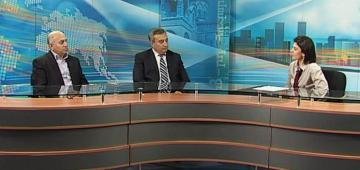
Science on DemandOften those who occupy public positions, go for academic degrees, while professional scientists who are engaged in the very scientic activities, leave either the industry or the country, and sometimes – both. What’s the demand for science today, why are academic degrees demanded? The topic “Science on Demand” is discussed by cultural anthropologist Gayane Shagoyan and ethnographer Mkhitar Gabrielyan. The conversation is hosted by Anna Sargsyan.
|
 |
State and Language, part 9Within the scope of the topic “State and Language”, writer, translator Diana Hambardzumyan and philologist Ashot Abrahamyan discuss the issues referring to the status of the Armenian language, the role of state in regulating the use of language, the political aggression towards our country by means of language. The conversation is hosted by Anna Sargsyan. |
 |
State and Language, part 8Within the scope of the topic “State and Language”, literary critic Gurgen Gasparyan and philosopher Ashot Voskanyan discuss issues on the development of language, creating a literary, scientific, technological thought in Armenian language, problems of translation and language-related policies. The conversation is hosted by Anna Sargsyan. |
 |
State and Language, part 7What is language policy, what functions does the state management system have in this respect? The topic is discussed by GareginChugaszyan, President of Information Technologies Foundation andArayik Harutyunyan, Expert in Oriental Studies, PhD, History. The conversation is hosted by Anna Sargsyan. |
 |
State and Language, part 6In the 22nd year of independence we still come across with the viewpoint, that Armenian language is at a dead-lock. Why did the issue of language come as a topic of discussions? What kind of deadlock is it – political, social or more of a value-type? The issue is discussed by writer HovhannesYeranyan and philologist Levon Galstyan. The conversation is hosted by Anna Sargsyan. |
 |
State and Language, part 5There is a common opinion about the language that as a fundamental component of individual and national identity, it fosters the establishment of a national state. And how does the state affect the development and status of the language? The topic is being discussed by Armen Petrosyan, Doctor of Philological Sciences and Hamlet Petrosyan, Doctor of Historical Sciences, culturologist. The conversation is hosted by Anna Sargsyan. |
 |
State and Language, part 4The historian Gevorg Yazichian and Ruben Tarumian, creator of Armenian computer fonts, relate the attitude towards the state language directly to the national identity and consciousness. To them, the cultural and language aggression by other countries is an infringement of the state security of Armenia. The conversation is hosted by Anna Sargsyan. |
 |
State and Language, part 3Ashot Melkonyan, Director of the Institute of History of National Academy of Science, and Victor Katvalyan, Director of the Institute of Language of NAS, are confident that Armenian should be the only language in Armenia with a status. Giving any other language a status would be unjustified and not prospective.
|
 |
State and Language, part 2Gevorg Gilants, poet, translator and Armen Hovhannisyan, journalist, converse on the topic of the language as the guarantee of state security and sovereignty. The conversation is hosted by Anna Sargsyan. |
 |
State and LanguageWhy does the Constitution stipulate state language of the country, do the state and native languages have to be necessarily the same, why does the loss of language considered to be loss of statehood? Henrik Hovhannisyan, corresponding member of National Academy of Science, and Davit Gyulzadyan, docent, candidate of philological sciences, talk about the functions of language. The conversation is hosted by Anna Sargsyan. |
 |
Will, independence and educationWhat is the relation between the will power and free creativeness, how can these affect learning and self-organization? How do these values work in our education system? Within the scope of the topic "Education and reality", a discussion is held between ethnologist and social scientist Satenik Mkrtchyan and cultural anthropologist Tigran Matosyan. The conversation is hosted by Anna Sargsyan. |
 |
Media EducationWhat is a media education? How to be guided in information flows, how to check the information? To what extent is media education introduced in modern education system? The topic is discussed by the Director of the Scientific and Educational Center of International Journalism, YSUL, and former Production and Training Director at Internews Armenia Harutyun Mansuryan.The conversation is hosted by Anna Sargsyan. |